
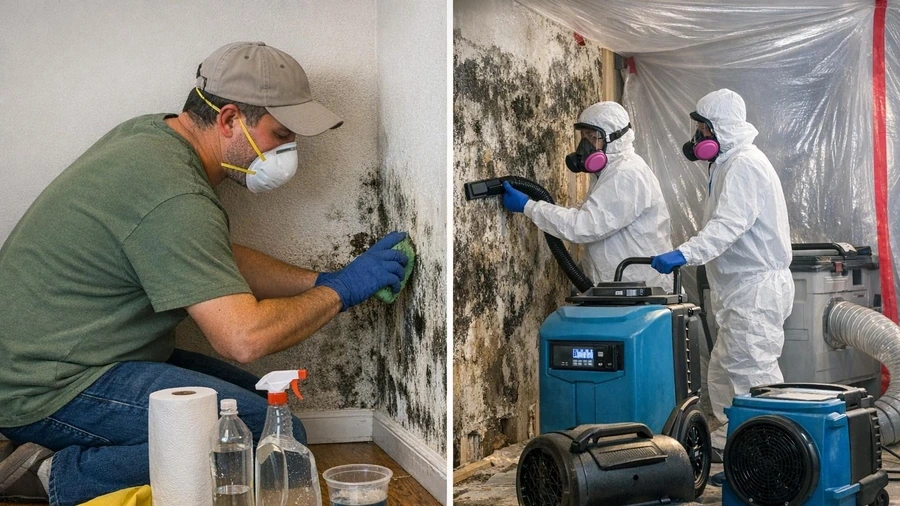
Why Hire a Professional Mold Remediation Company Instead of Doing It Yourself
Not every mold problem needs a professional crew. Some do. Here’s an honest breakdown of what you can reasonably handle yourself, and what actually calls for professional equipment and training.
A small, isolated spot of mold on a hard surface is often something a homeowner can clean up safely. A larger patch, hidden mold, or mold connected to your HVAC system is a different story. The size of the job, the material it’s growing on, and what’s feeding it all change whether DIY cleaning is a reasonable option or a way to make the problem worse.
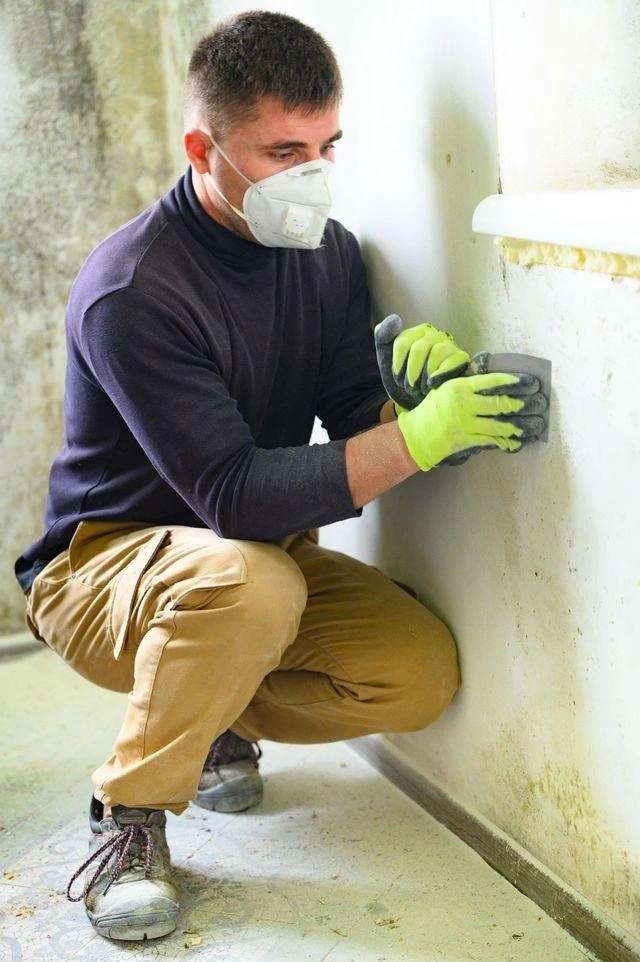
What You Can Reasonably Handle Yourself
A small, isolated patch of mold, roughly the size of a piece of paper or smaller, on a hard, non-porous surface like tile or glass, is usually within reach for a homeowner. Wearing gloves and a mask, scrubbing with soap and water, and drying the area completely afterward can take care of it. The key word is small and hard. Once either of those changes, the calculation changes too.
Where DIY Cleaning Falls Short
Wiping a visible spot doesn’t address what’s happening behind it. Scrubbing without containment can knock spores loose into the air, spreading them to other rooms instead of removing them. Porous materials like drywall, carpet, and insulation are even trickier, since mold can grow into the material itself, not just sit on the surface. Cleaning the surface can leave the roots behind, which is why the mold often comes back in the same spot within weeks.
What Actually Requires Professional Equipment
A few situations genuinely call for professional-grade equipment and training, not just more elbow grease:
Larger areas need containment barriers and negative air pressure to keep spores from spreading through the rest of the house while the work happens. Mold connected to an HVAC system can spread through the ductwork into every room it serves, which requires specialized cleaning most homeowners aren’t equipped to do safely. Contaminated porous materials, like soaked drywall or carpet padding, often need to be removed and disposed of properly rather than cleaned in place. And any mold exposure involving proper respiratory protection, not just a basic dust mask, calls for the kind of training a professional crew has and a typical homeowner doesn’t.
Signs It’s Time to Call a Professional
A few situations are worth handing off rather than tackling on your own:
- The affected area is larger than a small, isolated patch. Bigger jobs need containment to keep spores from spreading while the work happens.
- The mold is on porous material, like drywall, carpet, or insulation. Surface cleaning often doesn’t reach what’s growing inside the material.
- The mold followed significant water damage or flooding. The moisture source often needs professional attention too, not just the visible mold.
- Someone in the home has asthma, allergies, or a weakened immune system. Extra caution matters more when a household member is more sensitive to exposure.
A quick note on bleach. Bleach is a common go-to for DIY mold cleanup, but it mostly works on hard, non-porous surfaces. On porous materials like drywall or wood, bleach tends to kill mold on the surface while leaving what’s underneath untouched, which is part of why the mold often returns. It’s worth understanding this limit before relying on bleach as a full fix.
If you’re weighing this decision and still aren’t sure what stage your situation is at, our comparison of mold inspection, testing, and remediation can help you figure out what you’re actually dealing with first.