
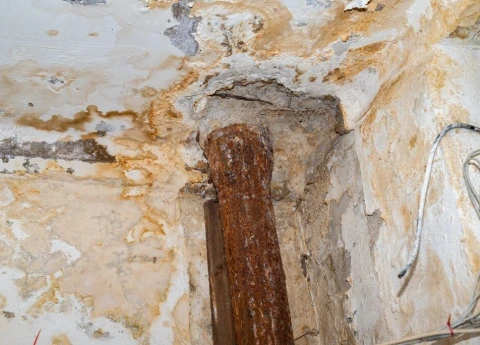
Water Damage and Mold: Why the Two Problems Are Connected
If you’ve just dealt with a leak, a flood, or an overflow, mold probably isn’t the first thing on your mind. It should be close to the top of the list. Here’s why the two problems are so closely linked, and what actually limits the risk.
Mold needs moisture to grow, and water damage is one of the fastest ways to hand it that moisture. Wet drywall, soaked carpet padding, and damp wood are exactly the conditions mold spores need to take hold. The good news is that mold doesn’t grow the instant water touches a surface. There’s a window of time where fast, thorough drying can stop the problem before it starts.
Why Mold Follows Water Damage
Mold spores are already present almost everywhere, indoors and outdoors, in tiny amounts too small to see. They’re harmless while surfaces stay dry, because mold can’t grow without moisture. Water damage changes that instantly. A burst pipe, a roof leak, or a flooded basement soaks materials like drywall, wood framing, and carpet padding, and those materials hold onto moisture far longer than you’d expect just by looking at them.
That’s the real connection: water damage doesn’t cause mold directly. It creates the damp conditions mold needs, and if those conditions stick around, growth usually follows.
The Window Where Drying Actually Matters
Most drying and restoration guidance points to the same rough window: mold can begin forming on wet materials within one to two days if they’re left damp. That’s not a guarantee it will happen by hour 48, but it’s the general timeline worth treating as urgent rather than optional.
This is why fast water extraction and thorough drying matter so much more than they might seem to at first. Getting standing water out, pulling up soaked padding that can’t be dried in place, and running fans or dehumidifiers to bring humidity back down all shrink that window. The faster materials actually dry, not just look dry on the surface, the lower the odds mold gets a foothold.
Hidden Moisture Is the Real Risk
Surfaces can look dry on the outside while staying damp underneath or behind them. Carpet padding, the inside of drywall, and the wood framing behind a wall can all hold moisture well after the visible flooring or surface feels dry to the touch. That hidden moisture is exactly where mold tends to start, out of sight, which is why “it looks dry now” isn’t the same as “it’s actually dry.”
Areas That Carry the Highest Risk
Some parts of a home are more vulnerable after water damage than others. Basements sit low and often flood from the outside in, and they’re frequently the last area to fully dry out because of poor airflow. Crawl spaces have the same airflow problem, plus direct contact with ground moisture. Any area with carpet, especially padding underneath it, holds water longer than hard flooring does, which makes it a common spot for mold to start after a spill, leak, or flood.
A quick note on insurance and timing. If your water damage is being handled through an insurance claim, don’t let the paperwork slow down the drying itself. Documenting the damage matters, but leaving materials wet while waiting on approval raises the odds mold shows up before the repair even begins.
Signs the Moisture Won a Head Start
A few signs suggest mold may already be forming, even if the water damage itself seemed minor:
- A musty smell that wasn’t there before the water damage. Smell often shows up before visible growth does.
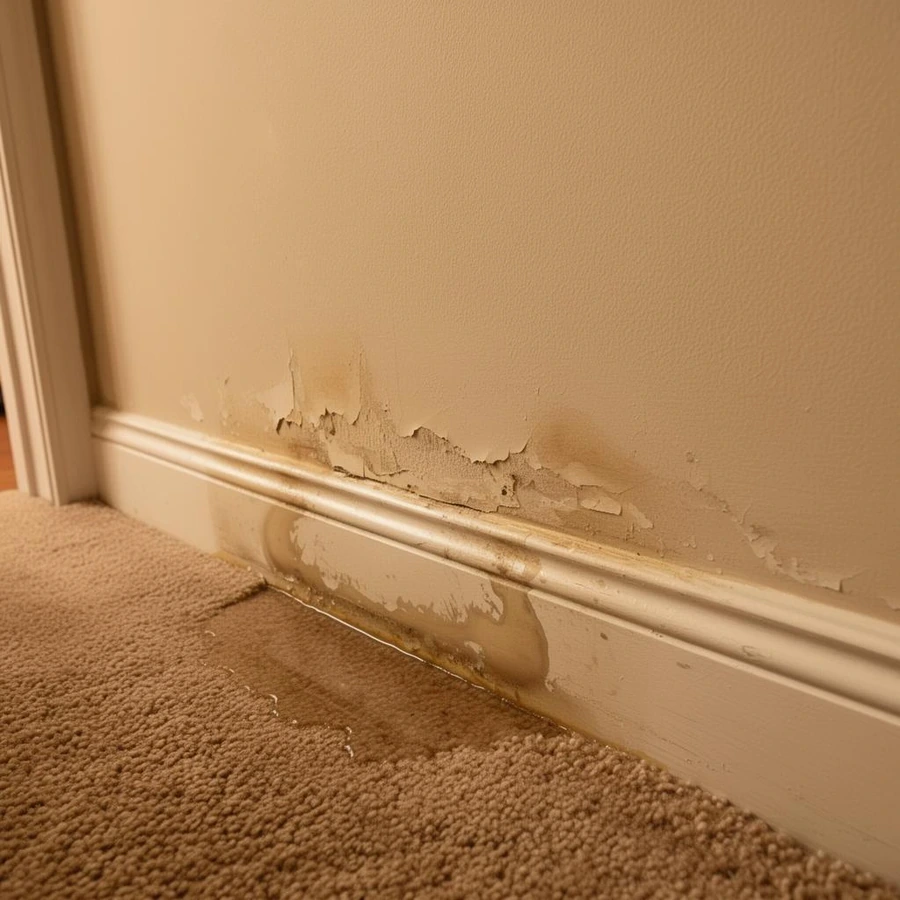
- Discoloration or staining on drywall, baseboards, or flooring near the affected area. Staining can mean moisture is still present under the surface.
- It’s been more than two days since the water damage and materials still feel damp. That’s past the window where growth commonly begins.